

Get To Know Germany’s Banzai Collection
Fifty years has taken them from Cali skateboarding to race cars in Munich.

In California during 1976, Banzai Collection broke the mold with their anodized aluminum body slalom skateboards. They’ve since become collectors’ items. Now, 50 years later Banzai Collective has maintained their roots in innovative and sophisticated design, but they’ve moved onto bigger sets of wheels.
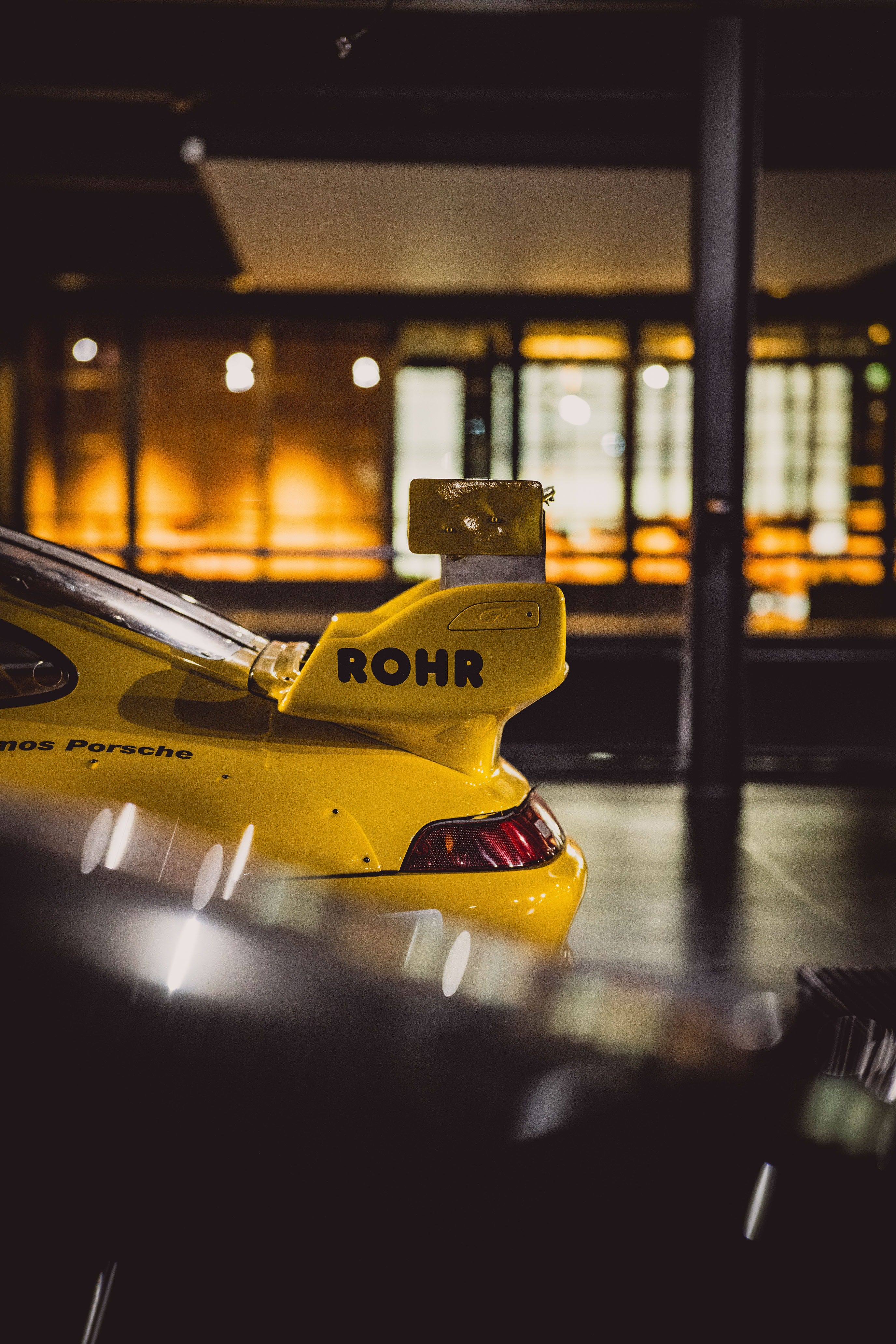
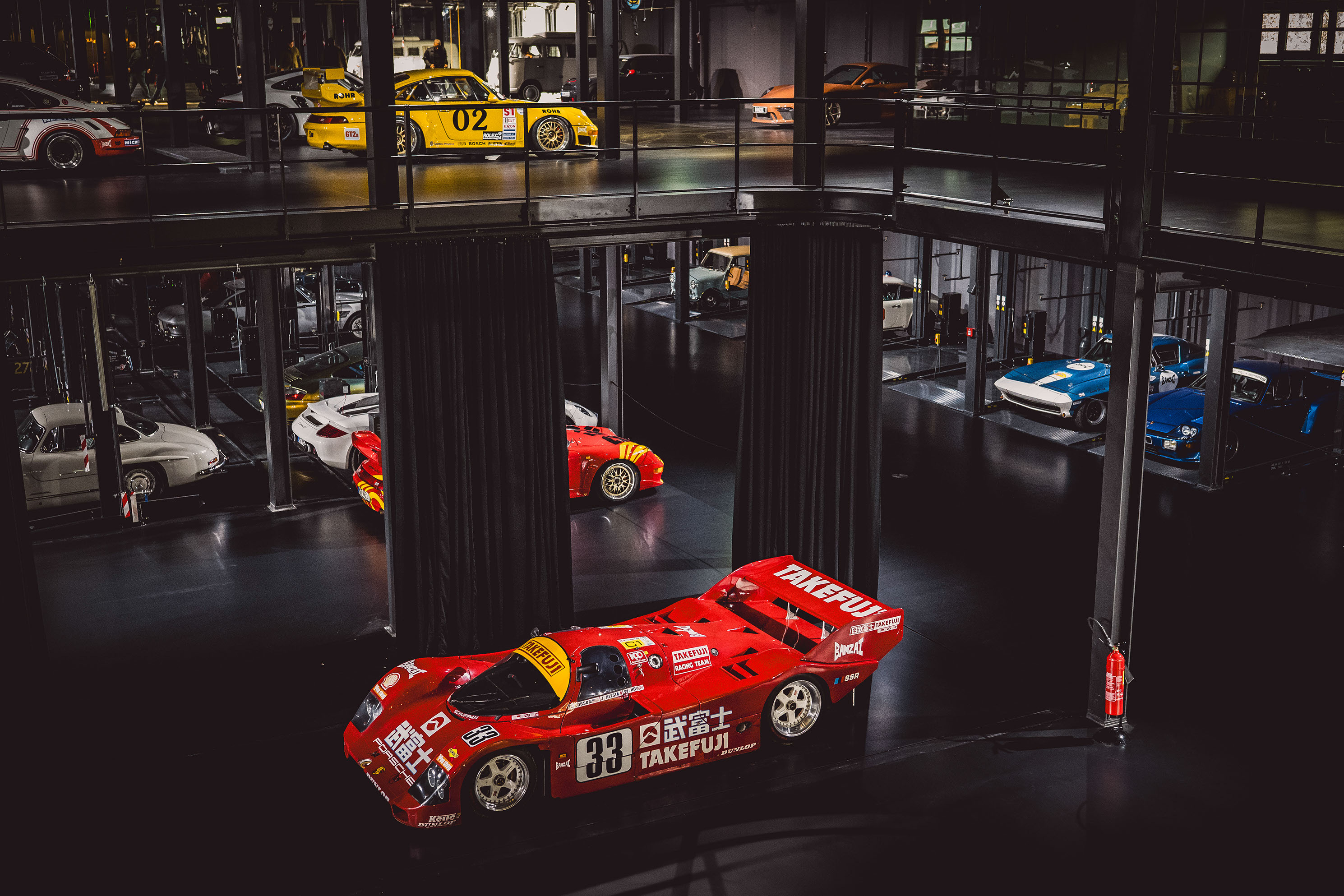
Just in January of this year, they introduced the Banzai Legacy Lab thirty minutes outside of the city center of Munich, Germany. It’s a classic car centered social and creative hub. (Take a tour here.) They offer car storage, but it’s so much more than that. For cars, clients have cutting-edge security and 24/7 access to the vehicles, a car workshop from ELEVEN Munich for everything from prepping for races to routine maintenance, and a detailing shop. Beyond that, the brand’s COO, Ole Kloth said, “We have a co-working spaces and a coffee shop. We have a photo studio and content creation area. We host workshops. You can have little events there.”
We caught up with Kloth and talked about Banzai’s journey, the new Legacy Lab and what’s next for the brand.
Rae Witte: How do we define Banzai Collection today?
Ole Kloth: “We have a long history coming out of the ‘70s being an American skateboard brand, but at that time it was also pretty strong in Munich. The brand was bought roughly 15 years ago and we tried to reestablish the American skate culture and this design piece—aluminum board, four wheels. We found out the hard way that the world is not waiting for a rebirth of a piece of design.
Luckily, at that time, Tommy, the founder and the owner of the brand, approached me and asked what we can do with the brand. I reminded him he’d asked me a month prior, ‘What can we do with our car collection?’
We want to do something meaningful. We want to preserve the value. All our cars are driven so we have no museum character. For us, skateboarding on concrete is much like racing or driving classic cars. It’s dangerous. You can make mistakes. And, out of this idea, we started to build a home for all of this close to Munich.
We see ourselves now, 50 years later, as just becoming a little bit quicker due to the horsepower of the cars. When you scroll on the phone at night, everything you see seems to be trying to be louder and bigger, and all of the events are trying to exceed each other. We found our position in a spot where we try to connect kindred spirits. This is very important for us.
It’s not a private club, but it’s not a club for everyone, because you have to fit in. The color of your credit card is not important. It’s more about what you bring to your surroundings. We are not fixed to a certain archetype. But if you contribute this story and people can learn from this, it’s as good as someone who got lucky in life and has a lot of cars.
With the Legacy Lab, we have roughly 250 places for engines, and we try to create a holistic approach for people who cherish the passion and the work behind these engineered arts. Recently someone said, ‘So, you want to be a secret society?’ That sounds mysterious. It’s kind of cool, but it’s not a secret society. It is more a trustworthy connection. We are all on the blue planet, and it’s very small in the universe. So, why not have a good time together?”
RW: I know that Banzai is originally a California brand. Of course, the driving experience is exciting and diverse, but why 30 minutes outside of Munich?
OK: “Living in a big city, there is nothing more annoying than trying to get your car out of the city to actually drive it. You don’t want to get caught in a traffic jam. The worst thing for most of these cars is having the engine on and sitting for however many hours in the traffic.
Since we’re in the southern region of Munich, it is the best to be able to quickly get to Switzerland, Italy, or Austria. We somehow have chosen an area where you’re quickly in different countries, but at the same time, we are located in a region where we have five big lakes. Depending on the car, in 30 to 40 minutes, you have one of the most beautiful routes through the Alps. You can start off from Legacy Lab and have access to tons of amazing day trips or multiple day trips.”
RW: I understand both car owners and those without cars at Legacy Lab come. Who can we find at Legacy Lab?
OK: “I would say a variety of different people. The first two people who signed up to co-work with us are absolutely not interested in cars, but they love the architecture and that they are surrounded by years and years of history.
It’s a mix. We have a lot of international clients, because it is quite common to store your car in Europe. In Asian regions and countries, some have very, very high taxes on valuable cars. In Singapore, I think it’s 300% on top of the new price if you want to import a Porsche or a Ferrari or something like this. For that money, a lot of them can fly first class once a month from Singapore to Munich, get in the car, which is prepared by our staff to be ready and is waiting. We can plan a tour. We can send you someone with you. And, of course, Europe is a very interesting driving experience, especially for internationals. You have Italy, the Mediterranean Sea, you have mountains, and it’s all very close together.
Then we also have the locals. And the locals, of course, keep people stopping by everyday. For them, it’s more like their lovely neighborhood cafe where they stop by to see new cars that come through or to meet and mingle with new people.
We have a lot of business people with us working at our property, and they come from very different fields. We have people in medicine and tech people. We haven’t tried to curate it. We wanted to have who organically comes, and it’s worked pretty well so far. We have been open three months, and the people I meet everyday when I’m there are very open minded and very interesting. So, it’s a variety.”
RW: What are your thoughts on American car culture versus European?
OK: “I wouldn’t say I see it as a versus. What we perceive across continents is often just a question of visibility. Some parts are louder, more immediate, easier to grasp from the outside. Others are quieter, more layered, and take time to understand.
But if you spend time with the people behind it—the ones who really care, who use these cars, preserve them, and share them—the differences start to fade. Same mindset, same respect. Just different ways of expressing it.
Maybe the real gap isn’t between continents, but in how much of that deeper layer actually becomes visible.
That’s the part worth opening up, on both sides. You don’t choose where something comes from. You choose what feels right when you’re in it.”
RW: Can you give me an example of some of the most exciting cars in or that have made their way through Legacy Lab?
OK: “We don’t have the biggest collection, but we have a ‘76 Shelby Cobra. It’s an old American race car. We always try to keep the patina of the car. The beauty about this car is we kept the chips and dents from all the races we kept, we keep in the paint, because it’s like earned scars.
We brought this car back to the states to all racetracks this car raced on in former times. We tried to find former racers that would know the first owner. We met the widow, and at that time, she was 91. We made a film with her and the other race drivers about the car. The theme explored whether things have souls.
She passed away a couple of weeks before we finished the film. But, when she stepped out of her house, she grabbed the cameraman on the arm, and she pointed on the door handle of the passenger seat, and said, ‘I think you still can find my fingerprints on there. Whenever my husband won a race, he picked me up in the car, and we went for ice cream.’ We all got goosebumps. We didn’t expect this. It was so emotional. It’s priceless to have this kind of interaction.”
RW: What’s next for Banzai? What does the future hold?
OK: “Our next project is setting up a petrolhead cafe downtown in Munich, because this has definitely been missing in most of the cities, even in German car cities.
I can tell you one secret, which is then not the secret anymore. Right now, we are working on a very rare project. We managed to get a very unique prototype, a 910 Porsche. We’re reconstructing the car, and, of course, we’re making a film about it, and it’s going to be in a book. The first painter of this car, from years ago, is doing the painting now. He’s 85 years old. Ironically, he was in charge of all the BMW art cars, including the art cars from Andy Warhol.
We have so much material about the history of this car, about the race drivers, and we are sometimes overwhelmed by the possibilities to restore it. We scanned everything from the car. I mean, it’s completely torn apart, and we scanned everything in order to preserve everything—the dents, the chips, the frame. This is a long term project for the next few years.
Besides that, we are already in very soft negotiations with people we met through Legacy Lab about new locations, because it’s something different and so far beyond car storage. If everything works out, it’s going to be big for us.”
This interview has been edited for length and clarity.